The neck has a tough job. Your head weighs about 11 pounds — and supporting that weight all day while sitting at a desk, commuting on I-95, looking at a phone, or working at a computer is a significant mechanical demand. When the joints become misaligned, the muscles and ligaments get irritated, and neck pain results. Dr. Thomas French has been treating neck pain at his Norwalk, CT practice since 2002 — with a 5.0 Google rating built on precise, honest care that addresses the cause rather than just the symptoms.
This page covers the most common causes of neck pain, specific conditions Dr. French treats at his 148 East Avenue office, and what to do — and not do — when neck pain strikes.
What Causes Neck Pain?
Muscle and Ligament Injuries
Muscles and ligaments are the most commonly injured tissues in the neck. Car accidents, prolonged poor posture, or sleeping in the wrong position can cause the neck muscles to hurt. Muscle pain usually presents as soreness with sharp stabbing pain on movement, or a bruised feeling. Due to the anatomy of the neck, muscle injuries frequently cause pain to radiate into the upper back and arms. Muscles can also go into spasm — an uncontrolled contraction that causes severe pain and temporary inability to move for several seconds.
Intervertebral Disc Injuries
Disc injuries in the cervical spine are less common than muscle injuries but more painful. They can result from trauma like a car accident, or from repetitive wear and degenerative changes over time. When a disc bulges or herniates in the neck it typically compresses the adjacent nerve root, causing pain that radiates down the arm into the hand. The specific location of the arm symptoms helps identify which disc level is involved. See the herniated disc treatment page for a detailed explanation.
Pinched Nerves — Cervical Radiculopathy
The spinal nerves that run down your arms originate in your neck. Bulging discs, inflamed muscles, or poor neck posture can irritate these nerve roots. This pain — often called a pinched nerve or cervical radiculopathy — feels like burning or electrical pain and is frequently accompanied by tingling or numbness in the arms and hands. The scalene muscles are particularly important here — more on that in the stretches section below.
Sprained Cervical Joints
The joints of the cervical spine can be sprained like any other joint in the body. A sprain occurs when the joint moves past its normal range of motion. An injured cervical joint produces deep aching pain with very sharp pain when it moves in the wrong direction. Joint restriction in the cervical spine is one of the primary targets of chiropractic adjustment.
Serious Causes of Neck Pain
Rare but serious causes of neck pain include cancer, bone infection, and vascular conditions like vertebral artery dissection. Chiropractors receive specific training to identify red flags that suggest serious pathology. If your neck pain is accompanied by fever, unexplained weight loss, severe headache of sudden onset, or neurological symptoms affecting your balance or coordination, Dr. French will refer you immediately to the appropriate medical specialist.
Why Do Neck Muscles Hurt?
Neck pain most commonly results from strains and sprains to the muscles and ligaments. Any joint or muscle can be injured when moved too quickly or beyond its capabilities. But because the neck’s primary job is supporting the head, forward head posture creates a sustained mechanical load that strains the muscles even without a specific injury event.
For every inch the head moves forward from its balanced position over the shoulders, the effective load on the cervical spine increases significantly. At 60 degrees of forward head flexion — the typical angle of looking at a phone — the effective load is approximately 60 pounds. Sustained over hours of daily screen time, this creates the chronic muscle fatigue and joint restriction that drives most of the neck pain Dr. French sees in Norwalk and Fairfield County.
Learn more about text neck and tech neck →
Who Gets Neck Pain in Norwalk and Fairfield County?
Neck pain affects every demographic but certain patterns appear consistently in Dr. French’s Norwalk practice:
Commuters and Office Workers
Professionals commuting on Metro-North from Westport, Darien, New Canaan, and Wilton stations into New York City — and those working in Stamford’s financial services corridor or Merritt 7’s corporate park — spend hours in sustained forward-flexed postures. The combination of train or car commuting, desk work, and the return trip creates the exact conditions for cervical joint restriction, upper trapezius tension, and the referred headaches that come with it. This is one of the most common presentations Dr. French sees.
Remote Workers
Fairfield County’s large remote-working population — spread across Westport, Weston, New Canaan, and Wilton — often works from home setups without proper ergonomic support. Laptops at desk height, screens that are too low, and chairs without lumbar support create the forward head posture that drives chronic cervical strain. The overuse of laptop computers is one of the most consistent causes of postural neck pain in this practice.
Drivers
Extended driving — particularly the daily I-95 and Merritt Parkway commute — creates sustained cervical loading in a position that most car seats don’t adequately support. Rear-end collisions on these corridors are also a primary source of whiplash injuries. Learn more about whiplash treatment →
Athletes and Active Adults
Golfers, cyclists, swimmers, and contact sport athletes all experience cervical strain from the specific demands of their sport. Golf swing mechanics, cycling forward posture, swimming rotation, and contact sport collisions each create distinct cervical loading patterns that Dr. French evaluates and treats with an understanding of the sport-specific mechanics involved.
Sleeping Position and Neck Pain

How you hold your neck during sleep is one of the most commonly overlooked causes of morning neck pain. No sleeping position is inherently problematic — but each position has specific considerations to avoid problems.
Side Sleepers
Side sleepers need a thicker pillow — or two pillows — to fill the space between the neck and shoulder and keep the cervical spine straight. A pillow that’s too flat leads to side-bending the neck all night, or scrunching the shoulder up to compensate, both of which produce cervical muscle strain and morning stiffness.
Back Sleepers
Back sleepers need a very flat pillow or no pillow to allow the head to rest without flexing the neck forward. A thick pillow pushes the head forward and loads the posterior cervical structures throughout the night.
Stomach Sleepers
Stomach sleeping requires the head to rotate 90 degrees to one side for the entire night — the most mechanically stressful position for the cervical spine. If you sleep on your stomach, use a very thin pillow and place it at the edge so the back of the head is slightly higher than the front, reducing the degree of rotation required.
See the complete guide to sleeping positions and neck pain →
Whiplash
Whiplash typically occurs in car accidents, but any rapid whipping neck motion can cause it. The extreme head movement combined with the speed of cervical flexion and extension produces an injury worse than a standard neck sprain — the strain often occurs along the full length of the muscle, and the overstretch nature of the injury takes longer to repair than a localized sprain.
Icing the muscles soon after the injury is important to limit the inflammatory response. Avoid aggressive stretching in the early phases — the muscles are already overstretched, and pulling on them further delays healing rather than helping it. Learn more about whiplash treatment →
Headaches and Neck Pain
Many tension headaches and cervicogenic headaches originate from the neck. The nerves that run to the back of the head pass through the suboccipital muscles at the top of the cervical spine. Injury or tightness in these muscles irritates the nerves and produces pain at the base of the skull that radiates around the sides of the head or into the forehead. Forward head posture is one of the primary drivers of suboccipital tension — making postural correction an important part of headache treatment.
Learn more about chiropractic headache treatment →
How Dr. French Treats Neck Pain
What Not to Do First
Neck braces are no longer recommended for neck pain except when there is a fracture or post-surgical stabilization is required. Research consistently shows that movement — even if limited — produces better outcomes than immobilization.
Heat is also best avoided early in a neck pain episode. Applying heat to an acutely injured muscle loosens it temporarily but also draws more inflammation to the area. That additional inflammation is difficult for the body to clear from an already compromised tissue. More pain often results once the heat is removed. Ice for 20 minutes at a time is the appropriate first step for acute neck pain.
Chiropractic Adjustments for Neck Pain
Chiropractic is one of the few treatments with consistent research support for spinal pain. Adjustments realign the cervical joints, reduce nerve irritation from joint dysfunction, and allow the surrounding muscles to move freely — which encourages faster, more complete healing. Initially the focus is on reducing pain. As the condition improves, Dr. French shifts focus to correcting the underlying alignment and movement patterns that caused the injury, reducing the likelihood of recurrence.
Soft Tissue Treatment
Theragun percussion therapy addresses the deep cervical and upper trapezius muscle tension that accompanies most neck pain presentations and doesn’t fully resolve with joint adjustments alone. Kinesio taping provides postural support and pain reduction between visits for patients with significant muscle involvement or postural challenges.
Postural Rehabilitation
A simple postural check: draw an imaginary vertical line from your ear straight down. Does that line pass through the center of your shoulder? If your ear is forward of your shoulder line, your neck muscles are working constantly to hold your head up rather than your skeleton bearing the load. Postural correction through specific exercises and adjustments reduces this sustained muscular demand and is one of the most effective long-term treatments for chronic neck pain.
Learn how to fix your posture →
When Are Surgery or Epidural Injections Necessary?
At Dr. French’s Norwalk practice, the goal is to help you avoid surgery whenever possible. While the surgeons in the Fairfield County area are highly skilled, surgery carries risks — and some patients experience more pain after cervical surgery than before. Conservative care — chiropractic, targeted exercise, and postural correction — is the appropriate first approach for the vast majority of neck pain presentations. If severe neck pain with arm symptoms, progressive neurological deficit, or significant disc herniation doesn’t respond to an adequate course of conservative care, surgical evaluation becomes appropriate. Dr. French will help you make that decision honestly and at the right time, and will refer you to the right specialist in the Norwalk area when needed.
Neck Stretches
There is no single stretch that resolves all neck injuries — and stretching sometimes provides no relief even when you target the right muscle. In general, stretching should be gentle. Think of wringing inflammation out of the muscle rather than pulling apart something stuck together.
Chin Tuck — Suboccipital Stretch
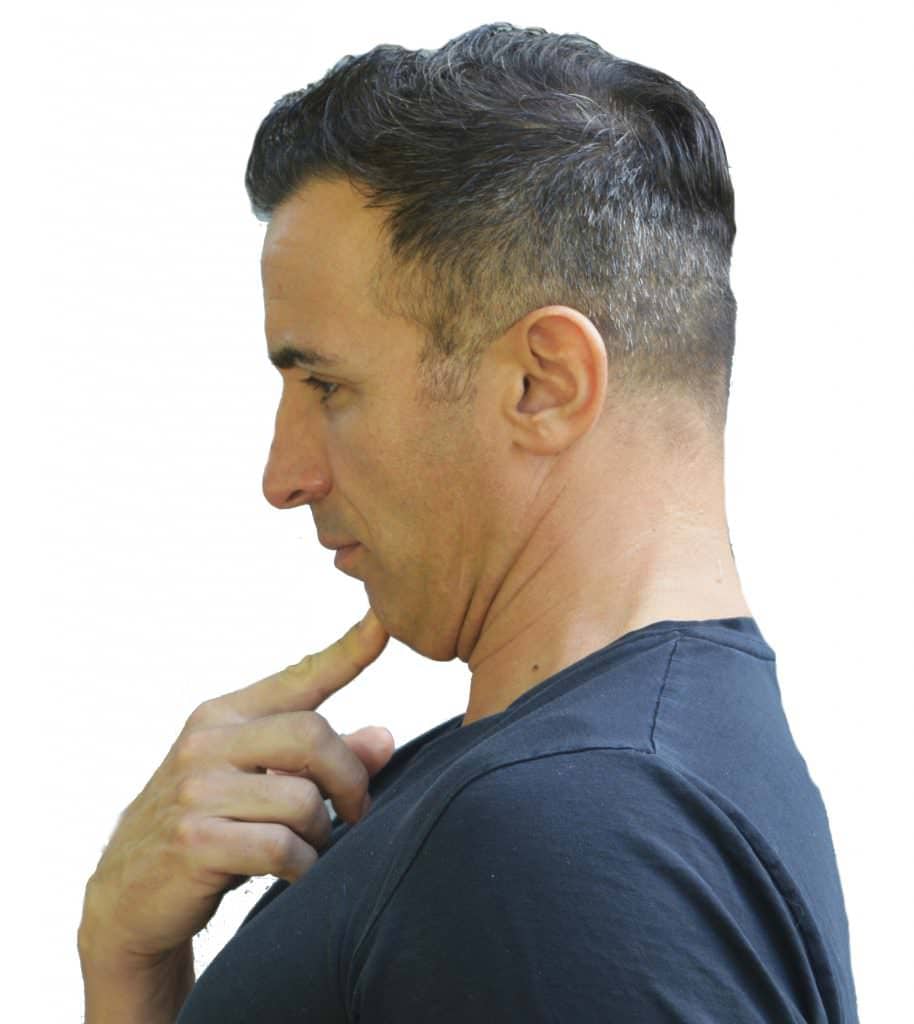
To stretch the suboccipital muscles — the primary cause of cervicogenic headaches and upper neck pain — pull your chin straight back as if making a double chin, without looking down. This creates gentle traction on the suboccipital region and activates the deep neck flexors that are typically inhibited in forward head posture. Ten repetitions, three times per day.
Scalene Stretch
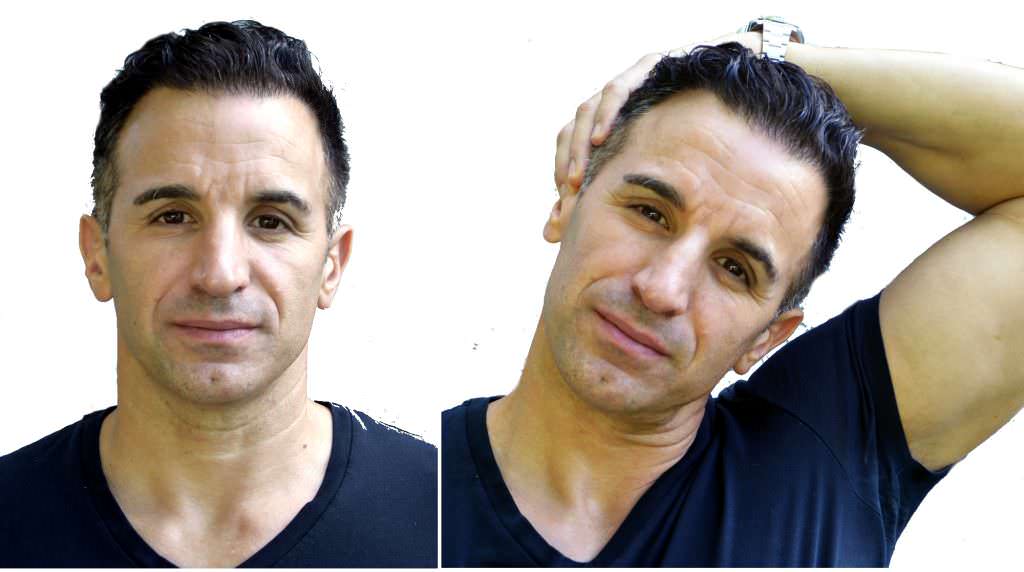
The scalenes are muscles on the sides of the neck arranged like the slats on vertical blinds — with forward head posture closing them together. The nerves that run down into your arms pass between these muscles, so when they are chronically tight, nerve symptoms in the hands and arms can result. To stretch them: look straight ahead and lean your ear toward your shoulder. You can gently add pressure with your hand to increase the stretch. Hold for 20-30 seconds per side. This stretch is particularly important for patients with arm tingling or numbness.

Trapezius Stretch
The trapezius muscles are the large muscles across the tops of your shoulders that run up into the neck. When the shoulder retractor muscles — the rhomboids — are weak, the trapezius compensates, taking on a job it wasn’t designed for. This is consistently aggravated by holding the head in front of the shoulders. To stretch: place the right arm behind your back and bring your chin toward your chest. Tilt your neck to the left while turning your head to the right. Hold and switch sides.
Frequently Asked Questions About Neck Pain
Yes — chiropractic care is one of the most research-supported treatments for neck pain. Dr. French uses specific cervical adjustments, soft tissue treatment, and postural rehabilitation to address the cause of neck pain rather than just managing symptoms. He has treated neck pain at his Norwalk, CT practice since 2002 with a 5.0 Google rating.
Acute neck pain from muscle strain or sleeping wrong typically resolves within 1-2 weeks with appropriate care. Cervical joint restrictions take longer — typically 4-6 visits over 2-3 weeks. Disc-related neck pain with arm symptoms takes longer still — 4-8 weeks of consistent care. Chronic neck pain that has been present for months or years requires more time to address. Dr. French gives you an honest timeline based on your specific presentation.
Ice for the first 48-72 hours of acute neck pain — 20 minutes on, 20 minutes off. Heat can loosen muscles temporarily but also draws more inflammation to an acutely injured area, which can worsen pain once removed. After the acute phase — typically 3-5 days — heat becomes more appropriate for ongoing muscle stiffness.
Yes — this is extremely common. Cervicogenic headaches originate from the cervical spine, particularly the suboccipital muscles at the base of the skull. Pain from these structures refers into the back of the head, around the sides, and into the forehead. Chiropractic treatment addressing the cervical component significantly reduces headache frequency in patients with this pattern. Learn more about headache treatment →
Yes. Nerve roots exit the cervical spine and travel down into the arms. When these nerves are compressed — by a disc herniation, inflamed muscles, or joint restriction — they produce pain, burning, tingling, or numbness that radiates from the neck into the shoulder, arm, forearm, or fingers. This is called cervical radiculopathy or a pinched nerve. The location of the arm symptoms helps identify which cervical level is involved.
Whiplash is a specific injury mechanism — rapid forced flexion and extension of the cervical spine, typically from a rear-end car collision. The resulting injury is generally more severe and takes longer to recover than standard neck strain because the muscles are overstretched along their full length rather than locally strained. Whiplash requires specific treatment considerations. Learn more about whiplash →
Possibly — sleeping position is one of the most common causes of morning neck pain. Side sleepers who use a pillow that’s too thin, back sleepers who use a pillow that’s too thick, and stomach sleepers whose head is rotated fully to one side all wake up with cervical strain. See the sleeping positions guide for specific recommendations based on your sleeping position.
Yes. Whiplash and cervical soft tissue injuries from auto accidents are a regular part of Dr. French’s Norwalk practice. He works with auto insurance and provides documentation for personal injury claims. Early treatment after an accident prevents acute cervical injuries from developing into chronic neck pain. Learn more about auto accident care →
Schedule Neck Pain Treatment in Norwalk, CT
If you’re dealing with neck pain, stiffness, arm symptoms, or morning neck pain in Norwalk or the surrounding Fairfield County area, Dr. French’s office at 148 East Avenue, Suite 1D offers same-day appointments for patients in acute pain. New patients are welcome.
Call (203) 939-9700 or book online.
Serving neck pain patients from Norwalk, Westport, Wilton, Darien, New Canaan, Weston, Stamford, and Fairfield County, CT.