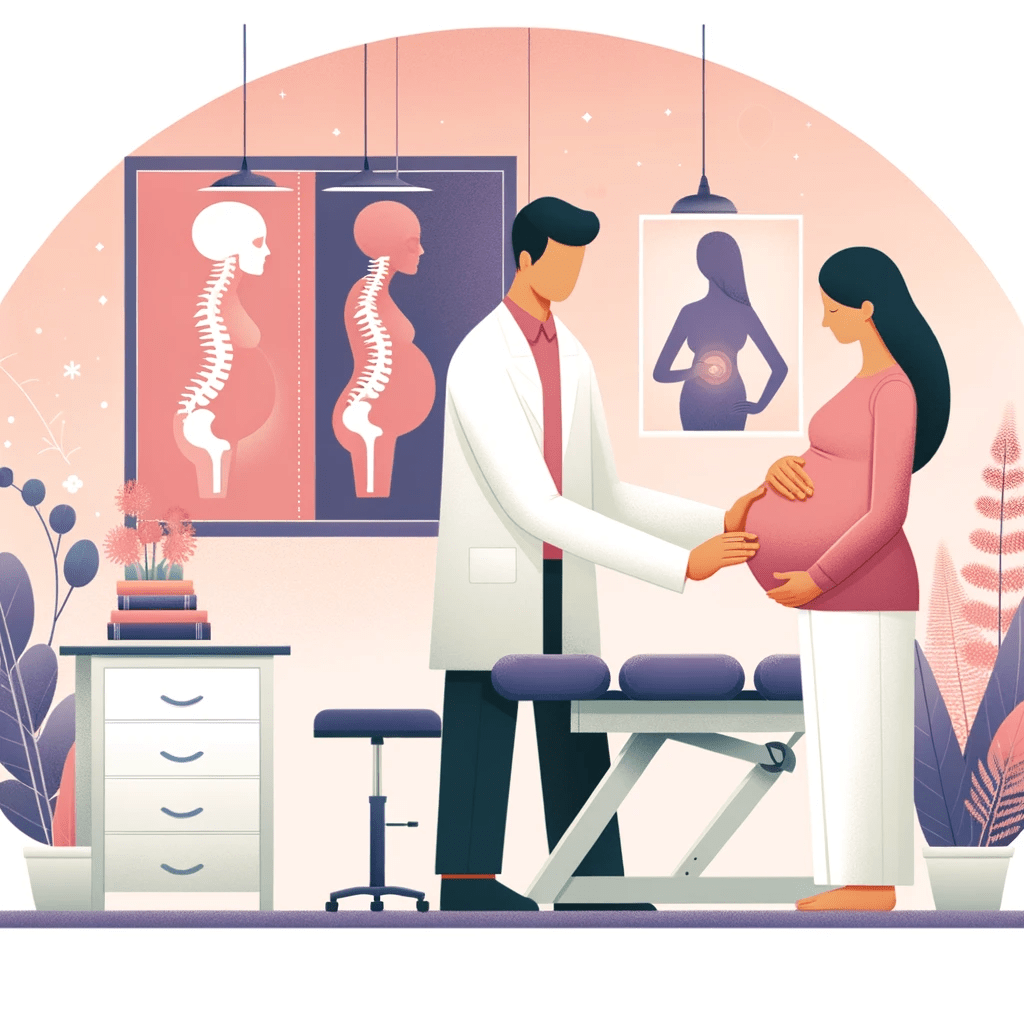
Dr. Thomas French has treated pregnant patients at his Norwalk, CT practice since 2002. He uses gentle, pregnancy-specific techniques appropriate at every stage of pregnancy and coordinates with your obstetrician or midwife when appropriate. Many OBs and midwives in the Norwalk and Fairfield County area refer their patients to Dr. French specifically because chiropractic provides effective relief without the medication concerns that complicate pain management during pregnancy.
Why Pregnancy Causes Back Pain
Growing a new person inside your body requires dramatic physical changes over forty weeks. These changes are necessary and remarkable — but several of them create direct mechanical stress on the spine and pelvis that causes back pain. Understanding which change is causing your pain is the first step toward treating it effectively.
Lumbar Back Pain — The Most Common Type
As baby grows, the increasing weight in the front of your body causes your lumbar spine to curve more than normal. This anterior pelvic tilt — the classic pregnancy posture — puts sustained stress on the muscles and ligaments surrounding the lumbar spine. Those structures become fatigued and irritated, the underlying joints become restricted, and lower back pain results. This is the most common pregnancy back pain presentation and responds well to chiropractic adjustments that restore normal lumbar and pelvic joint mechanics.
Sacroiliac Joint Pain
The sacroiliac joints sit at the base of the spine, connecting the sacrum to the pelvis on each side. During pregnancy, your body produces relaxin — a hormone specifically designed to loosen the ligaments of the pelvis in preparation for delivery. This is essential for the birth process, but as the SI joints become hypermobile, they also become more susceptible to injury, inflammation, and pain. Sacroiliac pain is often felt in the low back, buttocks, hip, or groin and can be sharp with specific movements like getting out of a car, rolling over in bed, or climbing stairs.
Chiropractic evaluation of the SI joint during pregnancy identifies whether it’s hypermobile and inflamed (requiring stabilization and gentle mobilization) or restricted and misaligned (requiring specific adjustment). The distinction matters — the treatment approach differs between these two presentations, and applying the wrong approach can worsen the condition.
Sciatica During Pregnancy
Sciatic nerve pain — burning, electric, or numbing pain that radiates from the lower back or buttock down into the leg — is common during pregnancy. The altered spinal posture and the growing uterus can create compression on the sciatic nerve through several mechanisms: disc pressure from the increased lumbar lordosis, piriformis muscle tension from the changing pelvic mechanics, and direct uterine pressure on the nerve in later trimesters. Learn more about sciatica treatment →
Upper Back and Neck Pain
The postural changes in the lower back during pregnancy create compensatory changes up the entire spinal column. As the lumbar spine curves forward, the thoracic spine and neck compensate to keep the head balanced over the body. This compensation, combined with the postural demands of feeding, carrying, and caring for a newborn after delivery, produces upper back and neck pain that many pregnant and postpartum patients experience in addition to their lower back symptoms.
Pelvic Girdle Pain
Pelvic girdle pain — pain in the front of the pelvis at the pubic symphysis, or pain across the SI joints and tailbone — is caused by the same relaxin-driven ligament laxity that causes SI joint pain. It can be debilitating in severe cases, making walking, stair climbing, and position changes extremely painful. Chiropractic evaluation assesses the pelvic mechanics contributing to this pain and uses specific, gentle techniques to restore more normal joint function within the context of the physiological laxity that pregnancy requires.
Post-Pregnancy Back Pain
Just as the SI joints need to loosen before delivery, they need to return to normal after baby arrives. If they become stuck or misaligned during the postpartum return to normal mechanics — a process that can take weeks to months — persistent back pain results. Postpartum chiropractic care addresses these returning SI joints and helps the body transition from pregnancy mechanics back to normal function. See the guide for new parent back pain → for more on what to expect after delivery.
Is Chiropractic Safe During Pregnancy?
Yes — chiropractic care is safe throughout all three trimesters of pregnancy when performed by a chiropractor experienced in prenatal techniques. The adjustments used during pregnancy are modified from standard techniques — using lower force, avoiding prone positioning as the pregnancy progresses, and focusing on the specific joints and mechanics relevant to pregnancy. No medications, no invasive procedures, and no X-rays are used.
The safety profile of chiropractic during pregnancy is well established in the literature. Multiple studies and systematic reviews have examined chiropractic care in pregnancy and found it to be safe and effective for pregnancy-related back pain. Many obstetricians and midwives actively refer patients for chiropractic care precisely because the benefit-to-risk ratio is strongly favorable compared to medication options during pregnancy.
If you have any concerns about whether chiropractic is appropriate for your specific pregnancy situation — high-risk pregnancy, placenta previa, pre-eclampsia, or other complications — discuss it with your OB or midwife first. Dr. French coordinates with your other providers and defers to their guidance when specific pregnancy complications are present.
How Dr. French Treats Pregnancy-Related Back Pain
The Evaluation
The first visit for pregnancy-related back pain begins with a detailed history — how far along you are, what changed and when the pain started, where exactly it is, what makes it better or worse, and what you’ve already tried. Dr. French performs a focused physical examination that identifies the specific joints and muscles causing your pain without any uncomfortable positioning or excessive pressure. The evaluation is thorough but always done with your comfort as the primary consideration.
Pregnancy-Specific Adjustment Techniques
Chiropractic adjustments during pregnancy are adapted to accommodate the physical changes of each trimester. In the first trimester, most standard techniques can be used with appropriate modification. As the pregnancy progresses and the abdomen grows, side-lying positioning replaces prone positioning for lumbar and sacral adjustments. Gentle mobilization and specific low-force techniques are used for the sacroiliac joints given their ligament laxity. The adjustment is always appropriate for the stage of pregnancy and the patient’s comfort level.
Soft Tissue Treatment
Massage-based soft tissue work targeting the lumbar paraspinals, piriformis, and gluteal muscles that become chronically tight during pregnancy complements the joint adjustments. This is particularly effective for patients with sacroiliac pain and sciatica, where the piriformis muscle often plays a significant role. Dr. French uses Theragun percussion therapy when appropriate — the depth and location of treatment is always guided by what’s comfortable and appropriate for the pregnancy stage.
Postural Guidance and Home Care
Adjustments address the mechanical dysfunction causing your pain. Postural habits and home care reduce the daily mechanical load that perpetuates it. Dr. French provides specific guidance on sleeping positions (left side sleeping with a pillow between the knees is generally optimal for pregnancy), lifting mechanics, sitting posture, and activity modifications appropriate for your trimester and specific condition.
Home Care for Pregnancy Back Pain
Between visits, these approaches can provide meaningful relief:
Ice
Ice is the most effective natural anti-inflammatory available during pregnancy — particularly important since most oral anti-inflammatory medications are not recommended. Apply a cold pack to the painful area for no more than 20 minutes at a time. Ice reduces tissue inflammation and numbs acute pain without any systemic effects on the baby.
Supportive Positioning
Sleep on your left side with a pregnancy pillow supporting your belly and a pillow between your knees — this reduces the rotational stress on the SI joints and keeps the lumbar spine in a more neutral position. Avoid sleeping flat on your back as the pregnancy progresses — the weight of the uterus on the vena cava reduces blood return to the heart.
Stretching
As the belly grows it limits most standard low back stretches. Two that remain accessible throughout pregnancy: sitting with your heels together (butterfly position) to stretch the adductors and inner thighs, and lying on your back and crossing one leg over the other to gently stretch the lumbar paraspinals and piriformis. Both are gentle and don’t require any abdominal compression.
Prenatal Yoga
Exercise during pregnancy is strongly recommended and prenatal yoga is one of the safest and most beneficial options. Fairfield County has several studios offering prenatal classes in Norwalk, Westport, and surrounding towns. Always inform the instructor you’re pregnant so they can modify positions appropriately.
Swimming and Aquatic Exercise
Aquatic exercise or simply floating in a pool takes the gravitational load off the spine temporarily — providing relief that is difficult to achieve any other way during the later stages of pregnancy. Many Norwalk and Fairfield County facilities offer pools and some offer aquatic prenatal exercise classes.
Partner Massage
Gentle massage by a partner targeting the lumbar and gluteal muscles provides real relief for pregnancy back pain. Moderate, sustained pressure — not aggressive deep tissue work — is most appropriate. Prenatal massage from a licensed massage therapist is an excellent complement to chiropractic care.
What to Expect at Each Trimester
First Trimester
Back pain is less common in the first trimester but does occur — particularly in patients with pre-existing spinal conditions that are aggravated by the hormonal changes of early pregnancy. Chiropractic care in the first trimester uses standard techniques with minimal modification. Establishing care early, before significant postural changes develop, is the most effective approach for patients with a history of back pain.
Second Trimester
The second trimester is when most pregnancy back pain begins as the belly grows and the center of gravity shifts. The lumbar curve increases, the SI joints begin to loosen, and the typical pregnancy posture becomes established. This is the most common time for patients to start chiropractic care and typically the most straightforward trimester to treat — the baby is not yet at full size and positioning for treatment is relatively comfortable.
Third Trimester
Third trimester back pain is extremely common and can be severe as the baby reaches full size and the mechanical demands on the spine and pelvis are at their peak. Treatment in the third trimester uses exclusively side-lying and seated positioning. Many patients continue care through the final weeks of pregnancy and find that regular adjustments during this period make the final weeks significantly more comfortable.
Chiropractic After Delivery
The physical demands of delivery — the sustained pushing, the positions maintained during labor, and the mechanical forces of the birth process itself — can leave the spine and pelvis significantly stressed even after an uncomplicated delivery. The SI joints and pubic symphysis that loosened during pregnancy need to return to normal mechanics, and this process doesn’t always happen smoothly.
Postpartum chiropractic care — typically beginning 4-6 weeks after delivery or when cleared by your OB or midwife — addresses the returning SI joint mechanics, the neck and upper back strain from feeding and carrying the newborn, and any residual lumbar pain from the pregnancy. Many patients find postpartum chiropractic care as valuable as prenatal care for getting back to full function after delivery.
Frequently Asked Questions — Pregnancy Chiropractic
Yes. Chiropractic care is safe throughout all three trimesters of pregnancy when performed by a chiropractor experienced in prenatal techniques. Modified adjustment techniques appropriate for each stage of pregnancy avoid prone positioning and use lower force. No medications, X-rays, or invasive procedures are used. Many obstetricians and midwives actively refer patients for chiropractic care during pregnancy.
Yes — pregnancy-related back pain is one of the most common conditions Dr. French treats. Chiropractic care addresses the lumbar joint restrictions, sacroiliac dysfunction, and piriformis tension that cause most pregnancy back pain. It provides effective relief without medications, which are often restricted during pregnancy.
Yes. Pregnancy-related sciatica — burning or electric pain down the leg — often responds well to chiropractic care. The altered lumbar mechanics of pregnancy create disc pressure, piriformis tension, and sacroiliac dysfunction that can all compress the sciatic nerve. Specific chiropractic techniques address these causes without medication.
Any trimester. Some patients begin in the first trimester, particularly those with pre-existing back pain. Most begin in the second trimester when the postural changes of pregnancy become more significant. Many patients continue through the third trimester and into the postpartum period.
Comfortable — that’s the primary goal. Adjustments during pregnancy are gentler than standard chiropractic and use positioning that accommodates your growing belly. Side-lying positioning is used as the pregnancy progresses. You should feel relief and increased mobility after treatment, not soreness.
You don’t need a referral, but it’s always a good idea to let your OB or midwife know you’re receiving chiropractic care. Most are supportive — many actively recommend it. If you have a high-risk pregnancy or specific complications, discuss chiropractic with your OB first. Dr. French coordinates with your obstetric provider when appropriate.
Round ligament pain — the sharp, brief pain in the lower abdomen or groin with sudden movement — is caused by the stretching of the round ligaments supporting the uterus. While chiropractic doesn’t directly treat the round ligaments, addressing the overall pelvic mechanics can reduce the tension that makes round ligament pain more frequent and severe.
Yes. Pelvic girdle pain — including pubic symphysis dysfunction and sacroiliac joint pain — responds well to specific chiropractic techniques that address the pelvic mechanics without overstressing the relaxin-loosened ligaments. Dr. French evaluates whether the pelvic joints are hypermobile and inflamed or restricted and misaligned — the treatment approach differs between these two presentations.
Most major insurance plans that cover chiropractic care will cover it during pregnancy. Coverage varies by plan. Call (203) 939-9700 or visit the insurance and payment page to verify your specific coverage.
Have more questions? See our FAQ
Other Conditions We Treat
Many patients have more than one issue going on at once. Here are other conditions commonly treated at this practice:
Back Pain · Neck Pain · Sciatica · Herniated Disc · Headaches · Upper Back & Rib Pain · Shoulder Pain · Whiplash · Auto Accident Injuries · Sports Injuries · Vertigo & Dizziness · Arthritis · Scoliosis
Schedule a Pregnancy Chiropractic Appointment in Norwalk, CT
Dr. French’s Norwalk, CT office at 148 East Avenue, Suite 1D welcomes pregnant patients at any stage of pregnancy. New patients are welcome. Same-day appointments are available for patients in acute pain.
Call (203) 939-9700 or book online.
Serving pregnant patients from Norwalk, Westport, Wilton, Darien, New Canaan, Weston, Stamford, and Fairfield County, CT.
Dr. French has completed specialized continuing education in pregnancy and postpartum chiropractic care through PESI — one of the leading CE providers for healthcare professionals — covering pregnancy-specific adjustment techniques, soft tissue care, and home exercise protocols for the pregnant and postpartum body. This training informs a clinical approach that goes beyond standard chiropractic to address the specific mechanical demands of each trimester and the postpartum recovery period.