Lower back pain is one of the most common reasons patients visit Dr. French’s Norwalk, CT practice — and one of the most treatable. Whether you’re a Fairfield County commuter whose back tightens on the train, a desk worker whose lower back aches by 3 PM, a parent who threw something out lifting a child, or an athlete dealing with a recurring injury, the approach is the same: find what’s actually causing the pain before deciding how to treat it.
Dr. Thomas French has treated lower back pain in Norwalk since 2002. He graduated summa cum laude from National University of Health Sciences and holds Connecticut Chiropractic License CT 1506. His 5.0 Google rating reflects over two decades of honest, precise back pain care — without unnecessary visits, packages, or pressure.
What Causes Lower Back Pain?
Lower back pain affects almost everyone at some point. Every episode is unique to the person experiencing it, but the sources of pain fall into predictable categories. Figuring out which structure is causing your pain is the essential first step — because the correct treatment depends entirely on the correct diagnosis.
Muscles and Ligaments
Muscles and ligaments are often injured when lifting or moving incorrectly. This pain can be achy with sharp stabbing, or it can feel like a bruise. It is usually localized to the area of the painful muscle, but trigger points can cause referred pain that moves. Muscle spasm — an uncontrolled contraction — causes severe pain and can lock you in place for several seconds when it fires.
Intervertebral Discs
The discs between your spinal bones act as shock absorbers and spacers. They are generally affected by long-term wear and tear, and disc pain is often totally disabling at first. A disc injury frequently causes pain to shoot down one leg — the pattern commonly called sciatica. See the sciatica treatment page for a detailed explanation of disc-related leg pain. For more on disc injuries specifically, see the herniated disc treatment page.
Spinal and Sacroiliac Joints
You can sprain the spinal joints and sacroiliac joints just like any other joint in the body. A sprain is often a deep aching pain that becomes very sharp with the wrong movement. Joint misalignment is a hallmark of spinal pain — it causes irritation to surrounding muscles, ligaments, and nerves, and is the primary target of chiropractic adjustments.
Nerve Compression
Any of the injuries above can compress the nerve roots exiting the lumbar spine, producing pain, burning, electrical sensations, numbness, tingling, or weakness in the legs. This nerve pain — sciatica — is one of the most disabling presentations of lower back pain and one of the most responsive to chiropractic care when the correct cause is identified.
Referred Pain from Organs
The kidneys, stomach, gallbladder, and other internal organs can sometimes cause back pain. This pain tends to be less associated with movement and can come and go in waves. It is usually accompanied by other symptoms like fever or abdominal pain. Dr. French screens for organ-referred pain at every initial evaluation and refers appropriately when it’s suspected.
Serious Conditions
Conditions like cancer or bone infection are rare causes of back pain. Chiropractors are trained to identify red flags that suggest serious pathology and refer immediately when they are present. If your back pain is accompanied by unexplained weight loss, fever, or pain that is constant and unrelieved by any position, an urgent medical evaluation is appropriate before chiropractic treatment.
Who Gets Back Pain in Norwalk and Fairfield County?
Back pain doesn’t discriminate, but certain patterns appear regularly in Dr. French’s Norwalk practice based on the specific demands of life in Fairfield County:
Commuters
Professionals commuting daily on I-95 or Metro-North between Norwalk, Westport, Darien, Stamford, and New York spend hours in flexed seated postures that load the posterior disc annulus and fatigue the lumbar stabilizing muscles. The combination of transit sitting, desk work, and the return commute creates the conditions for disc injury, sacroiliac dysfunction, and chronic lumbar muscle fatigue. This is one of the most common presentations Dr. French treats.
Desk Workers and Remote Workers
Prolonged sitting — particularly without adequate lumbar support — is one of the strongest predictors of lower back pain. Fairfield County’s large corporate and financial services workforce, including Merritt 7 professionals in Wilton, Stamford financial services employees, and the growing remote-work population across Westport, New Canaan, and Weston, develops lumbar and thoracic strain from sustained sitting that builds over months into persistent pain.
Active Adults and Athletes
Golfers at Wee Burn, Woodway, Country Club of New Canaan, Aspetuck Valley, and Shorehaven develop lower back pain from the rotational loading of the golf swing — a pattern Dr. French is specifically trained to evaluate through his Titleist Performance Institute golf biomechanics certification. Runners training for the Stamford Road Race or New York City Marathon develop lumbar stress from high mileage and gait mechanics. Weekend athletes across Fairfield County present with the acute strains that come from sudden loading of a spine that hasn’t been adequately prepared.
Parents and Manual Workers
Lifting children, carrying car seats, repeated bending and twisting at work — the mechanical demands of parenthood and physical occupations are a consistent source of the acute lumbar strains and sacroiliac injuries that Dr. French treats at his Norwalk office.
How Dr. French Treats Lower Back Pain
Accurate Diagnosis First
Every episode of lower back pain is unique. Before any treatment begins, Dr. French performs a thorough history and physical examination — orthopedic tests, neurological assessment, joint mobility evaluation, and postural analysis — to identify the specific structure causing your pain. Treatment that doesn’t match the diagnosis produces inconsistent results. This is why patients who’ve been treated generically for back pain elsewhere often respond better when the specific cause is correctly identified and addressed.
Chiropractic Adjustments
Specific spinal adjustments restore normal movement to restricted or misaligned joints, reduce nerve irritation from joint dysfunction, and allow the surrounding muscles to return to normal tone. Adjustments are precise, controlled, and tailored to the cause of your back pain — the technique used for a disc herniation differs from the technique used for a sacroiliac sprain or a lumbar facet restriction.
Soft Tissue Treatment
Dr. French uses Theragun percussion therapy to address the muscle spasm and trigger points that accompany most episodes of lower back pain. Breaking up fascial adhesions and reducing muscle tension alongside joint adjustments produces faster recovery than either approach alone. Kinesio taping provides ongoing support and pain reduction between visits for patients with significant muscle involvement.
The Two Phases of Back Pain Treatment
Treatment progresses in stages. The first phase focuses on reducing inflammation and protecting the injury. For mild injuries, ice and rest at home may be sufficient. For more significant injuries, chiropractic adjustments, electrical therapy, and Kinesio taping make the healing process as efficient as possible.
Once inflammation resolves and the muscle heals, stiffness in the underlying joints often remains. This is the stage where back pain most commonly recurs — the pain goes away, the cause doesn’t. A short course of rehabilitative exercises and continued joint adjustments at this stage resolves the underlying mechanical problem and significantly reduces the likelihood of repeat injury.
Back Pain and Pregnancy
Pregnancy often brings back pain ranging from mild discomfort from the extra weight to shooting pain down the leg. The combination of postural changes, hormonal joint laxity, and the mechanical demands of a growing uterus creates significant lumbar and sacroiliac stress. Chiropractic care is safe and effective throughout pregnancy — and particularly valuable because many pain medications are not recommended during pregnancy.
Learn more about pregnancy chiropractic care in Norwalk →
When Is Back Surgery Necessary?
At Dr. French’s Norwalk practice, the goal is to help you avoid surgery if at all possible. While the surgeons in the Fairfield County area are highly skilled, any surgery carries risk — and some patients end up in more pain after back surgery than before. For this reason, it is standard practice to exhaust conservative options — chiropractic care, physical therapy, and targeted exercise — before considering surgery.
Generally, if you have severe back pain that radiates to the leg, limits daily activities, and does not improve after a reasonable trial of conservative care, more invasive procedures may be appropriate. Dr. French can help you make that decision honestly and at the right time, and can refer you to the right specialist when surgery is genuinely indicated.
Stretches for Lower Back Pain Relief
There is no single stretch that resolves all back pain — and stretching sometimes provides no relief even when you target the right muscle. In general, stretching should be gentle. Think of wringing inflammation out of the muscle rather than pulling apart something stuck together.
Piriformis Stretch
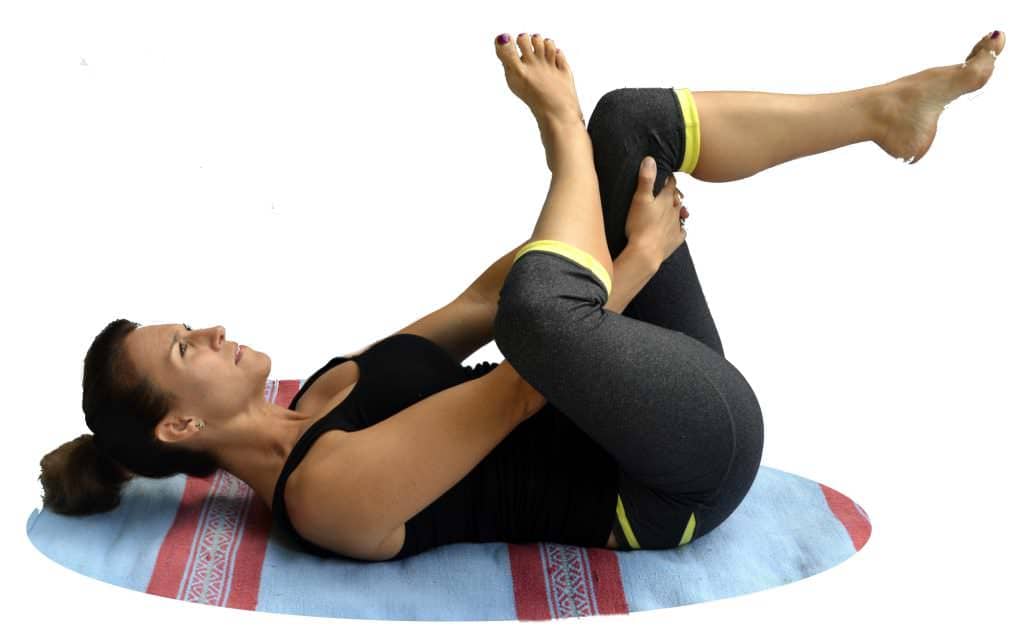
The piriformis is a muscle adjacent to the sacroiliac joint. It is commonly painful with prolonged driving or sitting on a wallet in the back pocket — the lateral tilt this creates is enough to irritate the muscle over time. Stretch it by crossing the ankle on the painful side over the opposite knee and pulling gently toward your chest.
Sacroiliac Stretch

The SI joint is one of the most common injury sites Dr. French evaluates. When inflamed you can sometimes feel a painful nodule in the lower back directly over the joint. A good stretch: while standing, cross the leg on the non-painful side over the painful leg and bend forward until you feel pulling in the painful area. Hold for five to ten seconds, repeat three times. Be gentle — the goal is to reduce inflammation, not force movement.
Lumbar Rotation Stretch
For the paraspinal muscles on either side of the lumbar spine, a gentle rotational stretch helps reduce tension. Lie on your back and drape one leg over to the opposite side as high as comfortable. Hold, then switch sides. This should feel like a gentle release, not a sharp pull.

Hamstring Stretch
The hamstrings attach to the bottom of the pelvic bones. When they’re too tight — as they commonly are in people who sit for long periods or runners with high mileage — they rotate the pelvis backward and flatten the lumbar curve, contributing to lower back pain. The standard forward-bend stretch returns the muscle to its prior length quickly after stopping. A more effective approach: lie on your back, hold behind one knee, and using the front of that leg actively try to straighten it toward the ceiling. Hold a few seconds, rest, repeat ten times. Done daily for a few weeks, this produces more lasting improvement than passive stretching.
Disc Extension Stretch
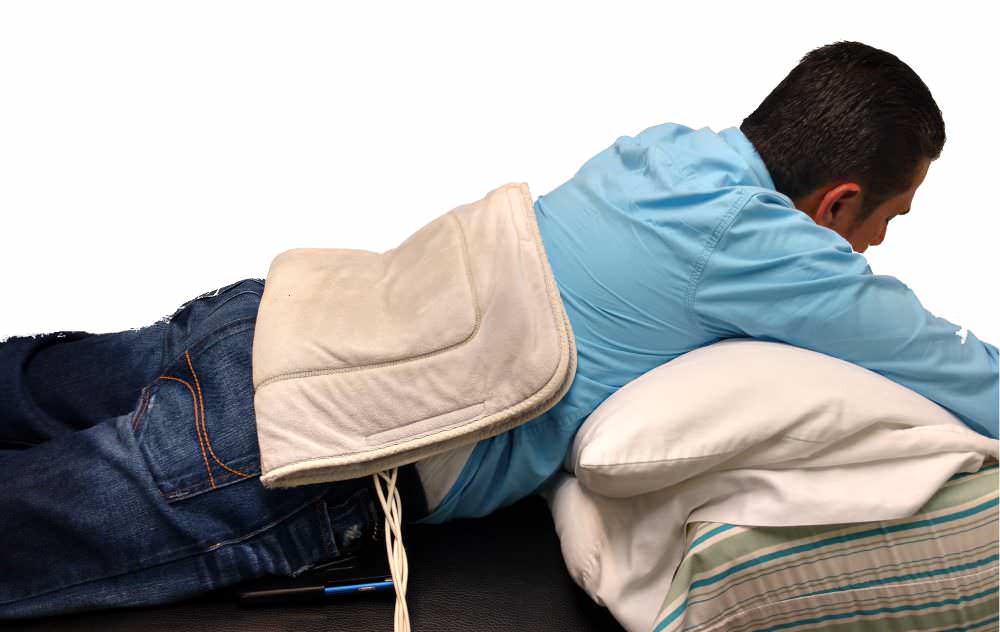
For disc injuries, lumbar extension puts pressure on the back of the disc, which can encourage the inner disc material to move forward away from nerves and painful areas. Discs respond slowly, so this requires a sustained hold of at least 15 minutes to be effective. Lie on your stomach with pillows under your upper body and press the hips gently down. Applying a hot pack during the stretch enhances the effect. This is not appropriate for all types of back pain — ask Dr. French whether your specific presentation would benefit before trying it.
Can You Prevent Back Pain?
While you cannot prevent every injury, you can significantly reduce frequency and severity by keeping the lumbar and thoracic spine mobile. A daily routine of gentle stretching and core strengthening counteracts the minor stiffness that accumulates from desk work and commuting and that, left unaddressed, becomes a future injury. If you have a history of frequent back injuries, a periodic chiropractic check-up before it hurts — rather than waiting for the acute episode — is considerably more efficient than treating the same injury repeatedly.
See the best exercise for your spine →
Frequently Asked Questions About Back Pain
Yes — chiropractic care is one of the most well-researched treatments for lower back pain, with consistent evidence of effectiveness for acute and chronic lumbar conditions. Dr. French has treated lower back pain in Norwalk, CT since 2002. Treatment focuses on identifying the specific cause of your pain — disc, joint, muscle, or nerve — and addressing it directly rather than treating back pain generically.
Acute lower back pain from muscle or ligament injury often responds within 4-8 visits over 2-3 weeks. Disc injuries typically take longer — 4-8 weeks of consistent care. Chronic back pain that has been present for months or years takes longer to address because the underlying mechanical patterns are more established. Dr. French reassesses progress at every visit and gives you an honest timeline based on how you’re actually responding.
Ice is generally better for acute injuries in the first 24-48 hours — it reduces inflammation and numbs pain. Heat is better for chronic muscle tension and stiffness that has been present for more than a few days. If you’re unsure, ice is the safer default for a new injury. Dr. French provides specific guidance based on your presentation.
Side sleeping with a pillow between the knees is generally the most spine-neutral sleeping position for back pain. Back sleeping with a pillow under the knees is also acceptable. Stomach sleeping is the most stressful position for the lumbar spine and is best avoided during a back pain episode.
Back pain can recur if the underlying mechanical cause isn’t fully resolved, or if the activity or postural pattern that caused it continues. This is why Dr. French addresses both the acute injury and the underlying joint mechanics, and provides home exercise and postural guidance to reduce recurrence. Many patients who’ve had recurring back pain find that a periodic maintenance visit every 4-6 weeks prevents the pattern from returning.
Not always. X-rays and MRI are ordered when the clinical picture suggests they would change the treatment approach — after trauma, when there are neurological findings, or when a patient isn’t responding as expected. Routine imaging for uncomplicated acute back pain is not standard practice and won’t change the initial treatment in most cases. Dr. French will recommend imaging when it’s clinically indicated.
Lower back pain refers to pain localized in the lumbar region. Sciatica is specifically a nerve pain pattern — pain, numbness, tingling, or weakness that radiates from the lower back down through the buttock and into the leg along the path of the sciatic nerve. Many patients have both simultaneously. Learn more about sciatica treatment →
Yes. Auto accident-related back pain — including disc injuries, muscle strains, and sacroiliac dysfunction from collision forces — is a regular part of Dr. French’s practice. He works with auto insurance and provides documentation for personal injury claims. Learn more about auto accident care →
Have more questions? See our FAQ
Other Conditions We Treat
Many patients have more than one issue going on at once. Here are other conditions commonly treated at this practice:
Neck Pain · Sciatica · Herniated Disc · Headaches · Upper Back & Rib Pain · Shoulder Pain · Whiplash · Auto Accident Injuries · Sports Injuries · Pregnancy Pain · Vertigo & Dizziness · Arthritis · Scoliosis
Schedule Back Pain Treatment in Norwalk, CT
If you’re dealing with lower back pain in Norwalk or the surrounding Fairfield County area, Dr. French’s office at 148 East Avenue, Suite 1D offers same-day appointments for patients in acute pain. New patients are welcome.
Call (203) 939-9700 or book online.
Serving back pain patients from Norwalk, Westport, Wilton, Darien, New Canaan, Weston, Stamford, and Fairfield County, CT.